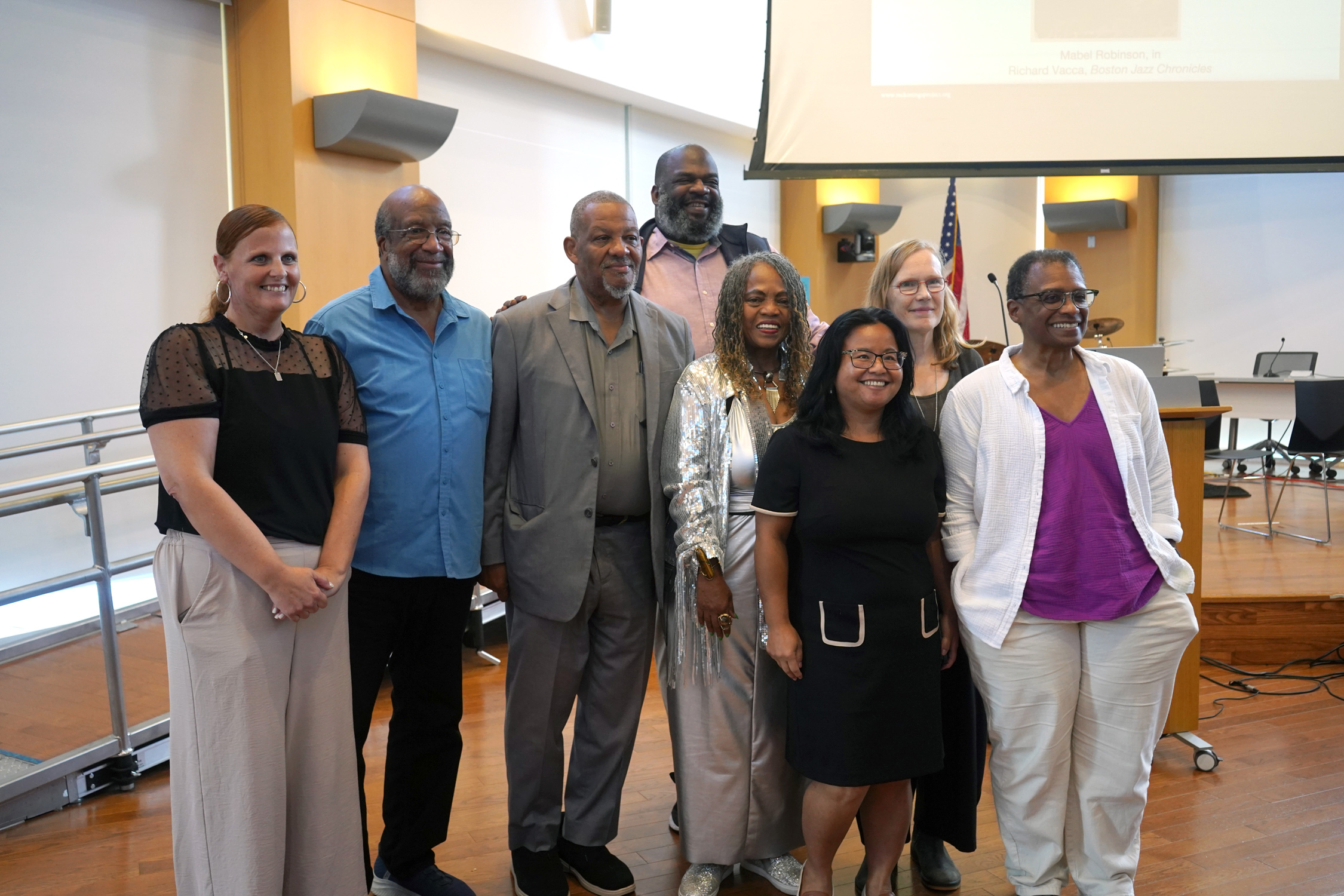
The Reckonings Project at The Way We Were Conference
Over the last few months, Marie Firmin has inspired Roxbury community members, archivists, historians, policy leaders and students to think actively about the history of Roxbury’s and South End’s Black businesses and the lessons we can take from that history for a vibrant future. In September, Marie convened and curated The Way We Were: Roxbury Black Wall Street, 1900-1065! from Tuesday, September 23rd through Friday, September 26th. Participants came together to celebrate and reflect on Roxbury’s rich legacy of Black entrepreneurship, art, culture, and history.
Each day of the program highlighted a different aspect of Roxbury’s Black experience and history, weaving together research presentations, oral histories, and live performances of music and sketches. Attendees had the opportunity to engage with scholars, community leaders, and artists who shed light on the historical roots of Roxbury as a vibrant hub of cultural and economic life.
On Wednesday, September 24, Reckonings Project Assistant, Safia Ibrahim, spoke about the life and legacy of activist, educator, and entrepreneur E. Alice Taylor. E. Alice Taylor (1892–1986) was born in Arkansas and later moved to Boston in 1927, where she lived for the rest of her life. From 1927 to 1942, Taylor managed a branch of Annie Malone’s Poro School and Beauty Shoppe in the South End. Under her management, it became the largest minority-owned business in New England at the time. After the Poro School closed, Taylor continued to support women and African Americans in the workforce. She co-founded and worked with multiple community organizations, and she was a committed member of the NAACP for 50 years, holding several officer positions throughout her involvement.
On Thursday, September 25, Reckonings Community Liaison, Dzidzor Azaglo, gave a reading from “How I Survived the Sierra Leone Civil War and Other Untold Stories,” written by Andrea Rosario-Gborie.
On Friday, September 26th, the Reckonings Project had the privilege of contributing to the celebration at the Bruce Bolling Building with its work on Jazz Square Activation. The day began with a presentation by Northeastern archivist Gina Nortonsmith on hotels, bars, rooming houses, restaurants and clubs that her research in Black business directories and the Green Books for Boston has revealed. Reckonings faculty member Uta Poiger shed light on the Boston jazz scene around Jazz Square (the intersection of Mass Ave. and Columbus Ave.), reflecting on ownership of the clubs such as Wally’s, the Savoy, and Conolly’s as well as the leading roles of bandleaders and pianists Sabby Lewis and Mabel Robinson Sims from the 1930s to the 1960s. In these years, the center of the Boston jazz scene was the area of today’s Jazz Square and Columbus Ave. and Tremont St., the same area that Gina Nortonsmith and her collaborators’ visualizations have revealed as Roxbury’s Black Wall Street and as the area welcoming Black customers during a time when many hotels, bars and restaurants did not serve Black customers. Visitors to the Isabella Stewart Gardner Museum can currently see Allan Rohan Crites’s oil painting Columbus Avenue from 1937, featuring a street scene with the Hi-Hat Club in the exhibit Allan Rohan Crite: Urban Glory.
A panel discussion featuring Leland Clark, Jim Braxton, Heang Ly, and Shana Penna; several skits about restaurants and nightlife; and a presentation on the long history of Slade’s on Tremont Street by its current manager, Britney Kyle Papile, rounded out the day. After lively discussions, audience members danced to Pat Braxton and her band’s performance of Billie Holiday songs. Throughout the day, the Reckonings Project exhibited posters on the history of jazz clubs and of major musicians, as well as the map of Boston jazz locations that the project has been working on for the last few months, a project currently led by UnderEcologies co-op Afra Ankita. We look forward to continuing and deepening the collaborations on Black entrepreneurship and Boston jazz history with Marie Firmin, Northeastern Archives and Special Collections, and Jazz Square Activation, and hope to bring additional collaborators into this work of jazz history-making.
by Octavia Zagorec