
Development Log: Holly Lyczak
My name is Holly Lyczak and I am a first-year student majoring in International Affairs and Spanish on the pre-law track at Northeastern University in Boston. I started my position as a Project Assistant at the Reckonings Project in the beginning of January 2025. My work has ranged from researching various events and people related to current Reckonings projects to helping preserve documents by scanning zines and post-its from our events. Apart from this, my work has mainly focused on editing transcripts and biographies for Freedom House’s 75th Anniversary Artifact Project with their intergenerational interviews. Through my work with Reckonings, I have learned about the importance of preserving and documenting histories, as such work recognizes the hard work and success of individuals and organizations such as Freedom House.
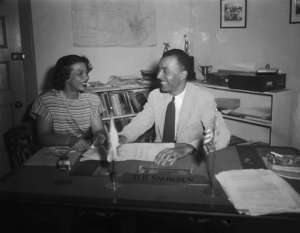
To start, Freedom House is a nonprofit organization based in Roxbury/Dorchester whose mission is to uplift and empower black and brown youth of the Roxbury, Dorchester, and Mattapan areas. Freedom House was founded in 1949 by Muriel S. and Otto Snowden who have had pivotal roles both inside and outside of their work at Freedom House. They worked with legislators and other important figures such as Martin Luther King and contributed to the social action brought by the Civil Rights Movement. From this, Freedom House established programs centered around helping youth succeed in their educational journeys whether that be graduating high school or obtaining a higher education. Within this, Freedom House has continued to develop a sense of community, family, and support that encourages and inspires youth to reach their goals. The success of Freedom House is one to be recognized and documented, so facilitating interviews that Freedom House scholars conducted with various alumni seemed to be a perfect way to celebrate Freedom House’s 75th anniversary.
Freedom House’s intergenerational interviews for their 75th Anniversary Artifact Project give voice to various alumni and board members to highlight the impact Freedom House has had in their life and how it has contributed to their success. Since the interviews are being turned into a book, it necessitates transforming the audio version of the transcripts to a readable text. The Reckonings team was able to create these transcripts with the help of the OtterAI transcription software. Although the AI tool was time efficient, there were some inconsistencies with using the AI tool such as not being able to detect proper nouns or words that might be unclear, grammatical errors, and proper punctuation. An example of this is that the AI did not recognize Freedom House as a proper noun so it was written as freedom house, or there were words added that were not said by the interviewee.
Because of this, my work focused on rereading these transcripts and correcting the AI’s transcription. Through editing, I found myself relying on the audio version of the transcripts as words often read differently compared to how they are heard which shows how essential the audio was to maintain the voice and authenticity of the interviewee. What is notable to mention is that this process of reviewing and editing these transcripts was done by both part time and full time staff in Reckonings, highlighting the hard work that needs to be put into this project to create the best version of these transcripts. Not only this, Freedom House also shares the transcript with each interview partner for review, because the interviewee’s opinion of their transcripts matters as Freedom House and Reckonings wants to produce a product that accurately represents who the interviewee is. Through my work with the transcripts of the intergenerational interviews, I have learned not only about the lives of residents from the Roxbury, Dorchester, and Mattapan area, but I listened to the impact that Freedom House has had on generations of alumni.
In addition to working on the interview transcripts, I also helped write the biographies of many interviewees. The process of creating the bios is similar to the process of the transcripts as there were many staff looking at one bio to try and create the best version that encompassed the information needed. Freedom House also shares the bio with each interview partner for their approval. These bios required a specific outline for information that was needed for each bio such as their connection to Freedom House, their education, occupation or work with other nonprofits, and possible awards. By following this outline, I came to rely on the transcripts to find these details as there were some cases in which interviewees did not have an online presence and oftentimes this information was found within their interview. Through researching these interviewees, I learned about the immense opportunities and sense of community Freedom House had fostered for these individuals and it was pleasing to see that impact shown in their success and their work whether that be through their involvement in other nonprofits and being recognized for that or their position as a CEO or founder of a company.
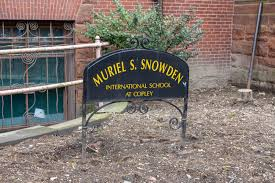
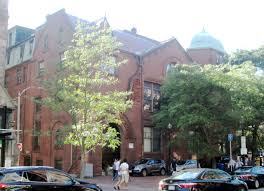
Apart from my work with the transcripts and biographies, I also conducted research on figures in Freedom House such as Muriel S. and Otto Snowden. Through the digital archive that Northeastern has, I was able to learn more about the pivotal work Muriel S. and Otto Snowden had during the Civil Rights movement in which they met with fellow activists and legislators across the nation to speak on matters of black rights. The success and impact Freedom House and these individuals have had on the greater Boston communities enthralled me into seeking out the businesses, buildings, and areas where these stories took place. One night when I was walking down Newbury Street in Back Bay with my friends, we stopped at the crosswalk which happened to be the corner where the Snowden International School was. As I read the sign that said the Snowden’s name, pure joy and excitement spread across my face because I recognized those names and I knew the history of who the Snowdens were as individuals, leaders, and founders. Muriel S. and Otto Snowden were significant figures in shaping the future of the youth and all of this information came flooding back to me as I read the name Snowden on the sign in front of the school. This is when I understood why preserving, archiving, and documenting the stories and histories of individuals, especially people of color, is so important and significant to preserving communities and recognizing hard working individuals.
As my first semester as a Project Assistant comes to an end, I am so grateful to have had the opportunity to help work on the Freedom House project as it expanded my knowledge on the history of different areas and people around Boston. Coming into this position as an out-of-state student from an urban suburb of Chicago, I did not know much of the surrounding areas outside of Northeastern. But, I was interested in learning about communities that were similar to mine. By researching Freedom House as an organization and the individuals related to it, I have become familiarized with these communities which has made me want to seek more stories that emerge from these neighborhoods whether that be through artwork or small businesses. My time at Reckonings has allowed me to collaborate with staff who work on other projects outside of Freedom House and learn more about various topics such as Black artists in Boston. These experiences have brought me closer to the Boston community and have broadened my perspective on archival history.