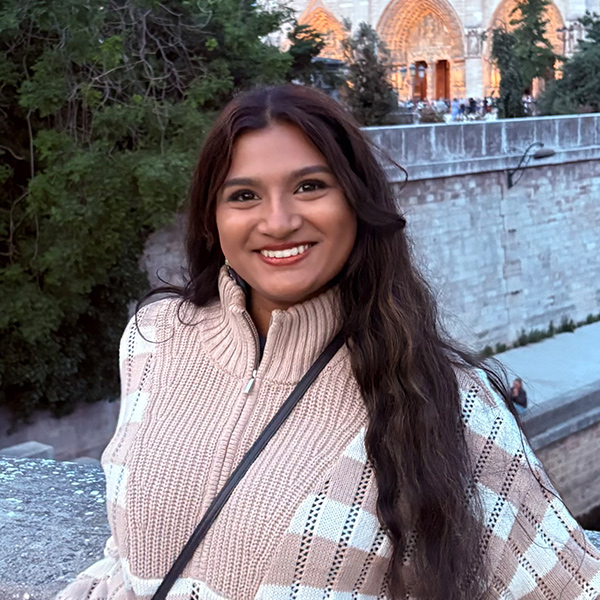
Development Log: Aiswarya Nair
I have learned a lot from being involved in the Reckonings project and specifically from doing thorough research on Melnea Cass, Elma Lewis, and Ruth Batson. These powerful women had such a profound influence on Boston’s culture and history, yet I knew nothing about them prior to this research, which is an indication of how much of their story still goes unnoticed and underappreciated. Such knowledge motivated me to go as in depth in performing my analysis as I possibly could, trying to find things that could provide insight on how these women interacted with the communities around them and even interacted with each other. They have each shaped the musical, artistic, educational, and overall cultural landscape of the Boston area, but through their connections they also helped shape the United States as a whole in terms of its cultural growth and diversity, and this broader impact is important to understand. Elma Lewis, who founded the National Center of Afro-American Artists and ran her school of fine arts in Roxbury for decades, built an institution that brought arts education to children who otherwise would not have had access to it. Ruth Batson fought relentlessly through the NAACP to expose the inequities of Boston’s public school system long before busing became a flashpoint in the city’s history, and Melnea Cass organized and advocated at the neighborhood level in ways that touched almost every major civic issue Boston faced in the twentieth century.
The process of working through archival data was something I had never done before at this level, and it pushed me to think differently about how history is recorded and preserved. A significant portion of this research involved navigating resources like the American Archive of Public Broadcasting, where interviews and broadcasts featuring these women have been stored but are rarely surfaced in mainstream conversations about civil rights history or American culture more broadly. I found a 1970 interview for instance in which Elma Lewis speaks candidly about racism in American cultural institutions, as well as footage of Melnea Cass
discussing the conditions facing elderly Black residents in Boston. These are primary sources that carry a weight that secondary accounts simply cannot replicate. Working with them required patience, critical thinking, and a willingness to sit with material that was unique and revealing. That kind of sustained engagement with difficult source material is a skill I know I will carry with me.
Although my major is health sciences and I am on the track to apply to medical schools in the future, this research has still been deeply fulfilling because it makes me feel as though I am part of this greater cause of helping restore important information about historical figures who shaped the place where I live and study. Medicine often asks its practitioners to think about populations, systemic inequities, and the social conditions that produce health outcomes, and in many ways this research has given me a richer way of thinking about all of those things. The women I studied were themselves deeply concerned with the health and wellbeing of their communities. Melnea Cass fought for access to public housing and civic resources, Ruth Batson for children’s right to an equitable education, or Elma Lewis for Black communities’ right to see
themselves reflected in art and culture. Understanding the roots of community advocacy and what it actually looks like in practice has expanded how I think about what it means to serve a population.
I feel as though this research has also given me a newfound connection to the Boston area. I currently live in Oakland and attend the Oakland campus, but I now feel more confident going to the Boston campus with the knowledge I have built through this project. Learning about the geography of these women’s work, the neighborhoods they operated in, and the institutions they built in Roxbury and across the city, has made Boston easier to understand as a place. That kind of contextual familiarity is something I did not expect to gain from this project, but it has definitely been one of the more meaningful outcomes.
More broadly, this experience has reinforced something I believe strongly, which is that the most valuable learning often happens outside my actual academic plan. I came into this project as someone focused almost entirely on the sciences, and now I have a much more developed sense of how to conduct research that is exploratory and archival. I have practiced evaluating sources for credibility and relevance, synthesizing information across different types of media, and constructing a narrative around evidence that requires interpretation. This research has thoroughly aligned with my goal to represent underrepresented populations and contribute to something greater than my own individual trajectory, and I am grateful to have had the opportunity to be part of it.