The Reckonings Project Artists-in-Residence program features artists who engage with hidden histories of Boston and/or the New England region and who see art as an entry point for discovery, engagement, and communal experiences. The artist or team of artists co-design interactions with Reckonings and community partners and archives–and as feasible with local community arts organizations or libraries.
The 2025/2026 Hidden Histories Artists-in-Residence are Lani Asunción and Joanna Tam, two Boston-based interdisciplinary artists whose work engages deeply with social justice, public memory, and historically underrepresented narratives. In their residency “Weaving Through History and Activism in Boston Chinatown,” Asunción and Tam draw on archival research and their backgrounds in performance, visual arts and community engagement to build interactive workshops. Their project uplifts the stories of grassroots organizers in Asian American, Native Hawaiian, and Pacific Islander (AANHPI) communities fighting for labor rights, housing security, and climate justice-issues that continue to shape Boston’s Chinatown community today. Their residency will culminate in Fall 2026 in an exhibit in Gallery 360. The residency program is a collaboration between The Reckonings Project, the Center for the Arts, Northeastern Archives and Special Collections, and the Center for Design at Northeastern University.
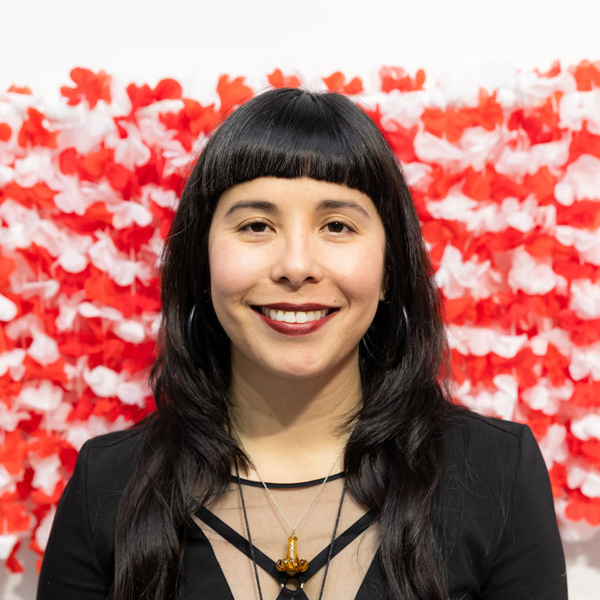
Lani Asunción
Lani Asunción is a Filipinx multimedia artist and educator whose socially conscious practice uses transmedia storytelling, public performance, and video to challenge existing systems and envision collective liberation. They are the curator and public art manager of the 2024-2025 Un-monument initiative at Pao Arts Center (BCNC) and teach at MassArt. Asunción has received the 2022 Public Art for Spatial Justice Grant from NEFA and the 2022 Future Frequencies Fellow at Studios at MASS MoCA, and was a 2023 Kala Fellow at Kala Art Institute.
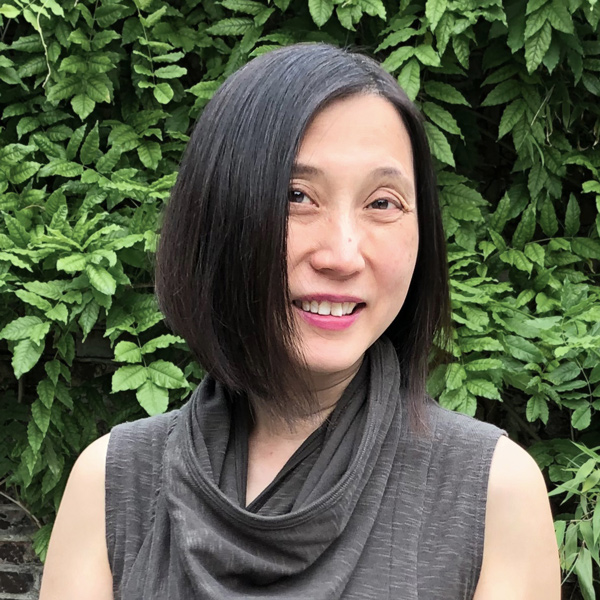
Joanna Tam
Joanna Tam is a Hong Kong-born visual artist and educator. Her interdisciplinary practice examines migration, the meaning of safety, and one’s connection to places through video, photography, performance, installation, and community engagement. She is the recipient of the 2024 Prilla Smith Brackett Award (presented by Davis Museum), the 2024 Collective Futures Fund’s Sustaining Practice Grant, and the 2020 SMFA Traveling Fellowship. She is a currently a visiting lecturer at the Massachusetts College of Art and Design.
“Weaving Through History and Activism in Boston Chinatown” brings Asunción and Tam together, drawing archival research and their backgrounds in performance, visual arts and community engagement, culminating in Fall 2026 in an exhibit in Gallery 360. They will explore the history and ongoing activism of the Asian American, Native Hawaiian, and Pacific Islander (AANHPI) communities in Boston’s Chinatown.
Asunción and Tam will hold the first workshop, as a part of Reckonings Community Network series on October 14, 2025, at the Center for Design, and the residency will culminate in Fall 2026 in an exhibit in Gallery 360. Their project uplifts the stories of grassroots organizers in Asian American, Native Hawaiian, and Pacific Islander (AANHPI) communities fighting for labor rights, housing security, and climate justice–issues that continue to shape Boston’s Chinatown community today.
Reckonings Community Network Series:
“Re-Mix, Re-Map, Re-Imagine: Activism in Boston Chinatown”
October 14th, 2025
How can we engage with the history of activism and make connections to a more just future? In this workshop, designed and led by Lani Asunción and Joanna Tam, Reckonings’ Hidden Histories Artists-in-Residence, we will activate the language found in the printed materials published and used by grassroots organizations in Boston Chinatown, currently housed at the Northeastern University Archives and Special Collections, through creative mapping and collective imagination.
Read an excerpt of a conversation between Lani, Asuncion, Joanna Tam, and Reckonings team members Octavia Zagorec and Dzidzor Azaglo recorded in early August 2025. This transcript was lightly edited for clarity.
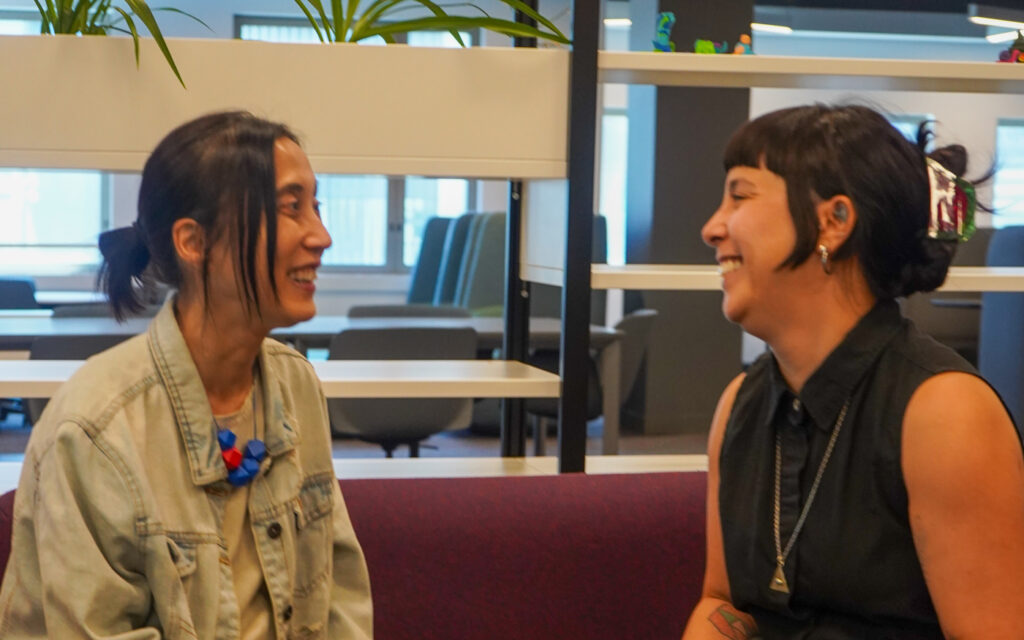
What brings you two together?
Asunción: We worked on a series of projects. One of them was a dual performance at the Boston Navy Yard in Charlestown, supported by the Boston Public Art Triennial at their lot lab. Joanna and I created responsive works that engaged with the military histories and the Freedom Trail, drawing from our own practices while responding to the site. We also worked on a project in Chinatown. I am the Curator and Public Art Manager at Pao Arts Center in Chinatown, and Joanna was one of the artists who activated public space through Un-Monument, in partnership with the City of Boston’s Mayor’s Office of Arts and Culture. For that project, Joanna created Imagine Safety. It invited the public to reflect on what safety means to them personally, and how to foster safety within the Chinatown community. The project was interactive and participatory, culminating in a book that archived community responses. The book, along with feedback gathered during the activations, was later exhibited.
Tam: The ACDC summer picnics, and then Experience Chinatown last year. There were a lot of correlations with advocacy and activism already happening in Chinatown, like Safe Streets. Many of these works directly responded to the work the community has already done and continues to do. It’s still very active. We both share an interest in learning more about the history of activism in Chinatown, which feels very meaningful to us, and also very timely.
What is important to preserve in your community?
Tam: I think that it’s important to preserve events and stories that have historic, social, political, and cultural significance in our community. I also feel preserving or telling stories of ordinary people, telling everyday stories is as important. I think those everyday stories of ordinary people reflect these historic moments in a more personal manner.
Asunción: Yeah, I agree. I think it’s really important to have those personal experiences, but also for folks to understand that there’s a connection between histories and advocacy work and civil engagement, so that future generations can then build upon that and then they know how to advocate. Some of that even falls into law, because you have to know specific cases to then build upon, and to understand “what was the work done around when this happened?” And then, “what do we now have to do to either advocate for ourselves, keep ourselves safe,” or even, “what is there to celebrate?” “What is there to uplift?” “What is there to remember that my forefathers did?”
Can you tell us more about what your workshop will explore?
Tam: Yeah! I’m thinking of designing mapping workshops that guide participants to connect activist stories in the past to what is happening in the community.
Asunción: So one of the ways I’m looking to engage the public with archives is embodying through role playing games […] I don’t totally know what that looks like yet, but we’ll explore that together.
Tam: Yeah, beautiful.
Asunción: It seems like we have the capacity here at Northeastern to build interactive experiences using archival documents, and I’m really looking forward to it.
We’re excited to see the wonderful work of Lani and Joanna. During our conversation with them, they highlighted themes of history, activism, and community storytelling in Boston’s Chinatown. If you’re interested in participating in a workshop with Lani and Joanna, join them at their upcoming workshop to experience these ideas firsthand, and stay tuned for more about their ongoing projects.